


“The time for decisive action, which I have previously mentioned, is finally getting closer,” warned Japanese Finance Minister Satsuki Katayama shortly after USDJPY breached 160 yesterday. “I think market players would know what I mean”, she added when pressed to expand. Hours later, if the players didn’t know before, they found out. The yen surged by 3% against the dollar, the currency’s biggest intraday move in close to two years and strong evidence that decisive action had indeed been taken.
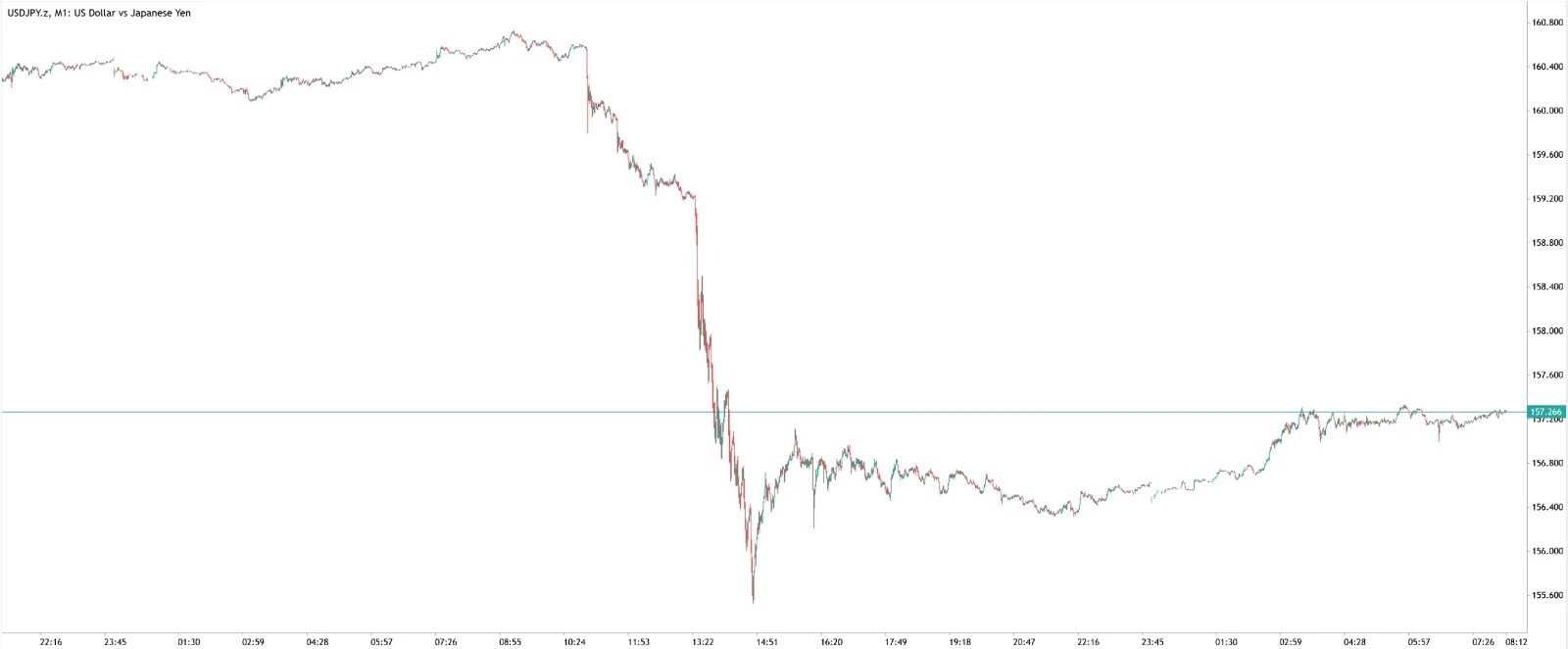
USDJPY had reached its highest level since July 2024, also the last time that Japanese authorities intervened in the FX markets to support the yen. The BoJ left its key policy rate in place earlier in the week, but a split vote left the possibility of hikes in the coming months very much on the table. The jump followed an unusually quiet period of trading for yen pairs, with relatively tight ranges seen for the previous six weeks. Japan’s Golden Week began on Wednesday, meaning domestic market liquidity is significantly lower than normal, and in turn moves in the currency are exaggerated. “Hold on to your smartphones even during the holidays”, warned Katayama, assuring and even putting consumers and traders on notice that officials were prepared to act 24 hours a day to stem the slide.
Rising oil prices caused by the Middle East crisis have caused strong concern around inflation, Japan exposed more than many countries as the vast majority of its energy is imported from the Middle East. Now unusually strong correlation with oil has raised eyebrows and indeed questions. Specifically, has the BoJ intervened in crude futures as well as the yen? While rhetoric from the Middle East ramped up anew overnight, talk that would of late push energy markets higher, oil was instead dropping in sympathy with USDJPY. A firm “no comment” to queries on intervening in both the currency and energies from Japan’s top currency diplomat Atsushi Mimura has only heightened speculation on a refusal to deny. Will we see more intervention before Golden Week is done? Thin trade on Monday morning is worth watching closely, with outsized moves a distinct possibility.

Apple is trading 2.5% higher in the after-market session today, following the release of its Q1 earnings report. Outgoing CEO Tim Cook announced that it was the company’s best ever first quarter, thanks to “double-digit growth across every geographic segment”. Revenue grew 17% year-on-year to $111.18billion, with iPhone sales at $57billion again making up the majority. Earnings of $2.01 per share beat analysts’ expectations of $1.95. Echoing other tech leaders though, Cook did warn on implications of the memory squeeze, with supply constraints driven by the availability of the advanced technology used in Apple’s devices, or lack thereof. Incoming CEO John Ternus will officially take the helm on 1 September, following on from Cook’s 15 year reign, which has seen an increase in Apple’s value of over $3.6trillion. The pair highlighted “a more personalised Siri” as a key development to look forward to this year, along with new software and developer tools with AI as an “essential, intuitive part of the experience”.
Otherwise, it was a mixed bag for the mega-caps as they released their highly anticipated first quarter figures this week. While the S&P and Nasdaq closed the main session at record highs once more, closer inspection revealed large and important divergences therein. While Amazon and Google saw their reports received positively by the market, Microsoft and Meta ended the day 4% and 8.5% lower respectively. Meanwhile Intel continued to surge, finishing the month up an incredible 114% with the backing of the Trump administration. Overall, April 2026 was the best month for US stocks since 2020, AI and in particular storage names flying despite continued troubles in the Middle East and the associated stagflation worries. The Nasdaq finished the month up close to 16%, shrugging off global turmoil to a large extent.
In the macro department, Tuesday sees the RBA hand down their latest interest rate call, following this month’s split decision to raise the Australian OCR by 25bp. Consensus is for them to hike for a third time in a row, giving back all of 2025’s cuts. But now that fuel has returned towards pre-excursion price levels, along with other soft indicators moving the right way, the possibility of a pause is back in play. Nonfarm Payrolls come late in the week. Consensus is a moderate 63k jobs added, vs a surprisingly strong rise of 178k last month. The unemployment rate is expected to stay just where it is. Rate expectations there have now moved all the way from 60bp of cuts to the Fed staying on hold for the rest of the year.
US earnings season continues next week: Uber, Airbnb, Palantir, McDonalds and AMD among the noteworthy companies releasing their Q1 figures to the market. Take advantage of our new extended hours on equities for those reporting in the pre and post market sessions.
Email: support@fintrixmarkets.com
Call: +357 22007860


